Connect with us

Travel

Streets To Subway: The Remarkable Travels of Boji the Dog

Published

on

Boji, the dog who rides the metro, has been capturing hearts not only across Istanbul, where he is from, but also throughout the internet. Those who come across his story are often left with a renewed sense of wonder and warmth – a proof that kindness still blooms in unexpected places.

But in case you haven’t heard of him, here’s a little glimpse. Boji the dog is nothing short of remarkable. He first began to gain popularity in mid-2021 among Istanbul commuters and later became internationally known through social media. What makes him so fascinating is his ability to travel up to 30 kilometers a day across the city hopping on trains, buses, and ferries as if he were any other commuter.

Once a street dog, Boji was adopted in 2022 by a local business. Yet he still enjoys riding public transportation and exploring Istanbul, his home. He knows where to enter, where to get off, and even where to find food and water. To keep him safe, city officials fitted him with a microchip – another small act of care that reminds us the world is still full of gentle hands and open hearts. In a world that often feels cold and hurried, Boji’s story is a warm reminder of the compassion God placed within us, waiting to be shared.

Boji’s days are simple yet beautiful. He is often seen curling up quietly on the metro beside strangers, trotting onto a ferry as the sea breeze brushes his fur, or waiting patiently at a tram stop with the calm assurance of one who trusts the goodness around him. It’s almost as if he embodies the peace that comes from resting in the care of his Creator, living out the truth that “every good and perfect gift is from above” (James 1:17).

Yet even Boji, like all of us, has faced unfair moments. Once, he was falsely blamed for misbehavior on a tram, though security footage later proved his innocence. His story of vindication gently reminds us that God sees what man overlooks and that justice and grace always find their way, even for a humble dog. As Scripture says, “The Lord works righteousness and justice for all who are oppressed” (Psalm 103:6).

Boji the dog stands as a living reminder that goodness still dwells among us woven through the actions of kind people, the patience of strangers, and the watchful care of God Himself. He shows us that small acts of love offering food, protection, or even a smile can make the world a gentler place.

So if you ever come across a dog like Boji, take it as a chance to show care to another of God’s creatures. For in showing kindness to the least of these, we reflect the heart of our Maker. After all, the world becomes a friendlier, brighter place when we choose to love, to care, and to believe in the quiet goodness that still walks among us sometimes on four paws, and sometimes, in the company of angels unaware.

Continue Reading
Click to comment

Leave a Reply

Your email address will not be published. Required fields are marked *

Travel

Two Strangers, One Extraordinary Friendship: The Story of Song and Hans.

Published

on

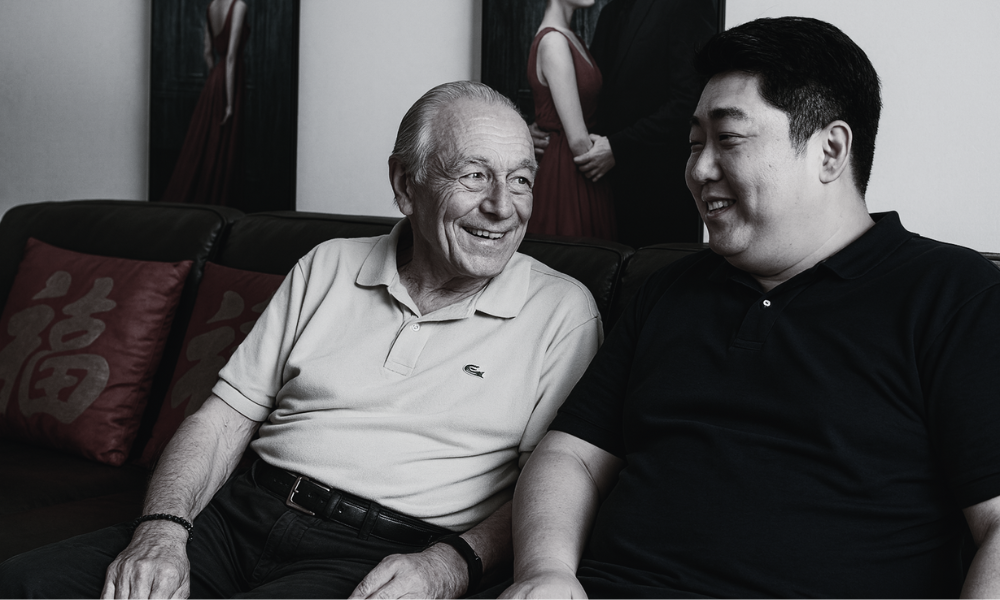
Friendship is truly one of God’s greatest gifts to us. From the very beginning, He designed people to live in connection and community. As the saying goes, “No man is an island.” And while friendships often grow through face-to-face encounters, sometimes the strongest bonds form between people who seem worlds apart. That’s exactly what happened between Song Yang and Hans Hodel – two strangers who became lifelong friends, proving that kindness knows no borders.

It was 1999 in London when Song Yang, a 19-year-old student from China, met Hans, an elderly retiree. Song was studying business management at Thames Valley University and, like many students far from home, often felt lost in the bustle of a new city. One day, Hans approached him, asking if he could help fix his watch. Song took a look, made a small adjustment, and smiled as the second hand began to tick again. Hans thanked him warmly and somehow, that small moment turned into the beginning of a friendship.

They started meeting often. Song would visit Hans to help tidy up, cook simple meals, and run errands. Hans, in return, would pay him for his work. There was nothing grand about their friendship. They were just two people sharing time, laughter, and the comfort of company. When Song’s friends from China came to visit, Hans opened his home to them too. Before long, he invited Song to live with him rent-free while he studied. For six years, they lived like family sharing companionship and trust.

In many ways, their story mirrors the parable of the Good Samaritan: a tale Jesus told about a man who helped a wounded stranger when others passed him by. Like that Samaritan, Song and Hans reached across differences of age, culture, and language. Their kindness was not measured or planned. It simply came from seeing another person’s needs and responding with love.

Then came a dark moment. Hans was robbed and beaten one evening. When Song found out, he promised to look after his friend and never leave him unprotected. Their friendship only deepened after that. Even when Song returned to China in 2007, they kept in touch by phone, never letting distance weaken their bond.

A few years later, Hans’s health began to fail. He suffered from femoral head necrosis and struggled to get treatment in London. When Song heard, he didn’t hesitate to urge Hans to come to China where he and his wife would care for him. And so, in 2008, Hans flew across the world to the home of the young man he once helped. Song and his wife welcomed him like family, cooking his favorite meals, making sure he had everything he needed. In return, Hans began teaching English in their neighborhood which also helped keep him busy and contributed to his well-being. It was his small way to give back, and perhaps his way of saying thank you.

Song cared for Hans until his passing in 2013. Their story quietly spread, touching hearts everywhere. It wasn’t about charity or duty but just love in action, lived out through simple, everyday kindness.

Like the Good Samaritan, they remind us that love isn’t bound by who we are or where we come from. It lives in the moments when we choose to see each other’s needs and step forward with open hearts. Two people, once strangers, shared their lives in a way that showed what friendship can be gentle, steadfast, and full of grace.

Two people, once strangers, shared their lives in a way that showed what friendship can be: gentle, steadfast, and full of grace. And in the end, their story leaves a quiet reminder that goodness still finds its way between people, no matter how far apart they begin.


Continue Reading

Reviews

The Heartbeat of Cebu City; Through My Eyes

Published

on

By

Cebu City which is fondly known as the Queen City of the South is a place where history, culture, and modern life blend into one unforgettable experience. It’s a city that carries the soul of the Filipino people: resilient, vibrant, and deeply rooted in tradition and community. From tales of conquest to stories of survival, Cebu’s narrative runs through its streets, festivals, food, and people. As you read through this guide, allow me to walk you through what it’s really like to live in the city of Sugbo (Cebu in Bisaya), a place I’ve called home for nearly a decade.

Cebu City traces its recorded history to 1521 when Portuguese explorer Ferdinand Magellan arrived on its shores. This moment left a long-lasting imprint on the city and the country as a whole. Today, in areas like Colon Street which is the oldest street in the Philippines, you’ll find monuments and markers retelling the story of that first encounter: the struggle for territory, the birth of trade, and the shaping of early Filipino identity. Walking through these heritage sites feels like stepping into a living museum. Old houses, Spanish-era structures, and small ancestral museums sit side-by-side with modern cafés, schools, and shops. It’s an everyday reminder that Cebu has always been a meeting place of cultures, ideas, and histories.

Cebu is also home to one of the country’s most iconic festivals: Sinulog. Every January, the city pulses with life as roughly a million devotees, tourists, and revelers gather for a grand celebration full of street dancing, music, and color. For locals, however, this celebration is more than just a festive attraction. It is considered to be deeply spiritual and centers around long-held traditions of Catholic faith and devotion. Cebu has been a hub for image-and-saint-centered worship for generations, something that remains a strong cultural pillar today. Places like Simala Shrine draw thousands of visitors from all walks of life, each coming with their own stories, prayers, and hopes. Whether you share this belief or simply want to witness the devotion of the Cebuanos, these cultural expressions are an integral part of what shapes daily life in the city.

As someone who has lived in Cebu for nearly ten years, I’ve witnessed firsthand how quickly the city has transformed. New roads, bridges, business districts, and residential developments have risen, signaling progress even in the midst of political controversies and corruption concerns that often cloud local governance. Despite these challenges, Cebu’s growth has been undeniable, ambitious, fast-paced and full of potential. For a long time, I admired the direction the city was heading: more opportunities, more accessible public services, improved transportation, and a booming economy that attracted both locals and foreigners.

But the recent typhoon, locally called Tino, was a humbling reminder that rapid development can come with vulnerabilities. Overnight, the storm exposed weak infrastructure and raised questions about the city’s preparedness for natural disasters. It was a bittersweet moment seeing how far Cebu had come and how far it still needs to go.

On the other hand, despite the storms, setbacks, and growing pains, what makes Cebu City truly special is its people. Cebuanos are warm, helpful, and resilient. There’s a sense of community here that shows up in times of need: neighbors helping neighbors, strangers offering assistance, and the city rallying together whenever adversity strikes. This is something I have experienced and observed, even during the years of the COVID crisis that my family and I endured.

Like every city, Cebu has its pros and cons. It’s a place of beauty and complexity, rich in culture, shaped by history, fueled by progress, yet still vulnerable to the challenges of modernization and nature. But if there’s one thing Cebu stands out for, it’s the way its people show up for one another. Whether in good times or in moments of crisis, the heart of Cebu beats strongest when its community comes together. If you choose to live here, you won’t just find a city – you’ll find a home.



Continue Reading

Engage in Scripture like never before. Download the YouVersion Bible App and enjoy regular time with the Bible, right when and where you need it.

Trending